The 'Helicopter Economics Investing Guide' is meant to help educate people on how to make profitable investing choices in the current economic environment. In addition to the term helicopter economics, we have also coined the term, helicopternomics, to describe the current monetary and fiscal policies of the U.S. government and to update the old-fashioned term wheelbarrow economics.
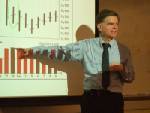
The December 12, 2007 meeting of the New York Investing meetup focused on the likely economic scenarios for the coming year. A video, entitled 'Economic Predictions for 2008' summing up these predictions can be found on You Tube at: http://www.youtube.com/watch?v=bZLsD2DHvLw.
The most important themes cited for 2008 were inflation and recession. Even though inflation is and has been under reported by the U.S. government since the 1980s, it was our opinion the even the manipulated numbers, let alone the real ones, would start to become noticeably higher. We predicted that as inflation was climbing, that the U.S. economy was likely to be gripped by recession (with negative job creation in each of the first 3 months of 2008, it now looks like the U.S. economy was in recession in the first quarter of the year). We also pointed out that it was unlikely the government would be reporting that we were in recession (the government GDP figures are unreliable, just like the inflation figures) until the recession was well under way or even over.
A widening out of the credit crisis with credit card debt, car loans and student loans being impacted was also mentioned in the talk (defaults in all of these loan types were rising significantly in the first quarter of 2008). A big drop in commercial real estate and a continuing weakness in residential real estate were also predicted (foreclosures continue to hit multi-year highs).
Special mention was made of the problems with bond insurers (monolines) and how their condition would continue to deteriorate, but the rating agencies might fail to lower their ratings appropriately because of political pressure (the official lowering of the ratings of these companies could lead to financial chaos). Bond insurer SCA's credit rating was lowered substantially in March 2008, but the rating agencies were still mostly maintaining ratings on the industry leaders MBIA and Ambac.
More bailouts of banks and broker-dealers with the assistance of the Fed was also predicted. The behind the scenes purchase of Country Wide Financial by Bank of America as the secret behest of the Federal Reserve (something denied by Bank of America) was given as an example. The Sovereign Wealth fund purchases of parts of major U.S. financial institutions, certainly with the knowledge and approval of the federal authorities, was also cited as a type of bailout that would continue to take place. Citibank in fact received just such a bailout (for the second time) in mid-January. Of course, the Bear Stearns bailout in mid-March was the most spectacular example of the of the accuracy of this prediction.
Finally it was predicted that the U.S. dollar would continue to drop and this would eventually lead to some form of currency intervention by the G7 countries (most likely late in the year, particularly after the election). Unless the Fed choices to raise rates substantially, this intervention will fail.
NEXT: The First Four Trading Days of 2008
Daryl Montgomery
Organinzer, New York Investing meetup
Organinzer, New York Investing meetup
For more about us, please see our web site: http://investing.meetup.com/21.


 Posts
Posts